Ad Creative Style Guide

Role
Creative Director, Principal Creative
Timeline
1 Year
Channel
Business Impact
Formalized Creative Style Guide for the ad that aligned to the overarching Brand Standards, Improved communication across teams when discussing ad creative
Challenge
Relaunching a brand with an entirely new and inexperienced team I needed a way to exemplify my vision for the ad and how that vision aligned with the larger brand standards for Giant Food. The style guide needed to be extremely thorough, covering the most minute details of the ad layouts, from section headers and font styling, to item setup and promotional guardrails. Developing the style guide would give me the tools to more easily communicate creative expectations and remove a ton of guesswork on the part of my designers and production artists on my team.

Objective
Develop a formalized and thorough style guide for the weekly ad that aligned with the larger brand standards for Giant Food. Key elements I needed to cover in the style guide included:
Logo Usage
Acceptable Colors and Usage
Font Stylings
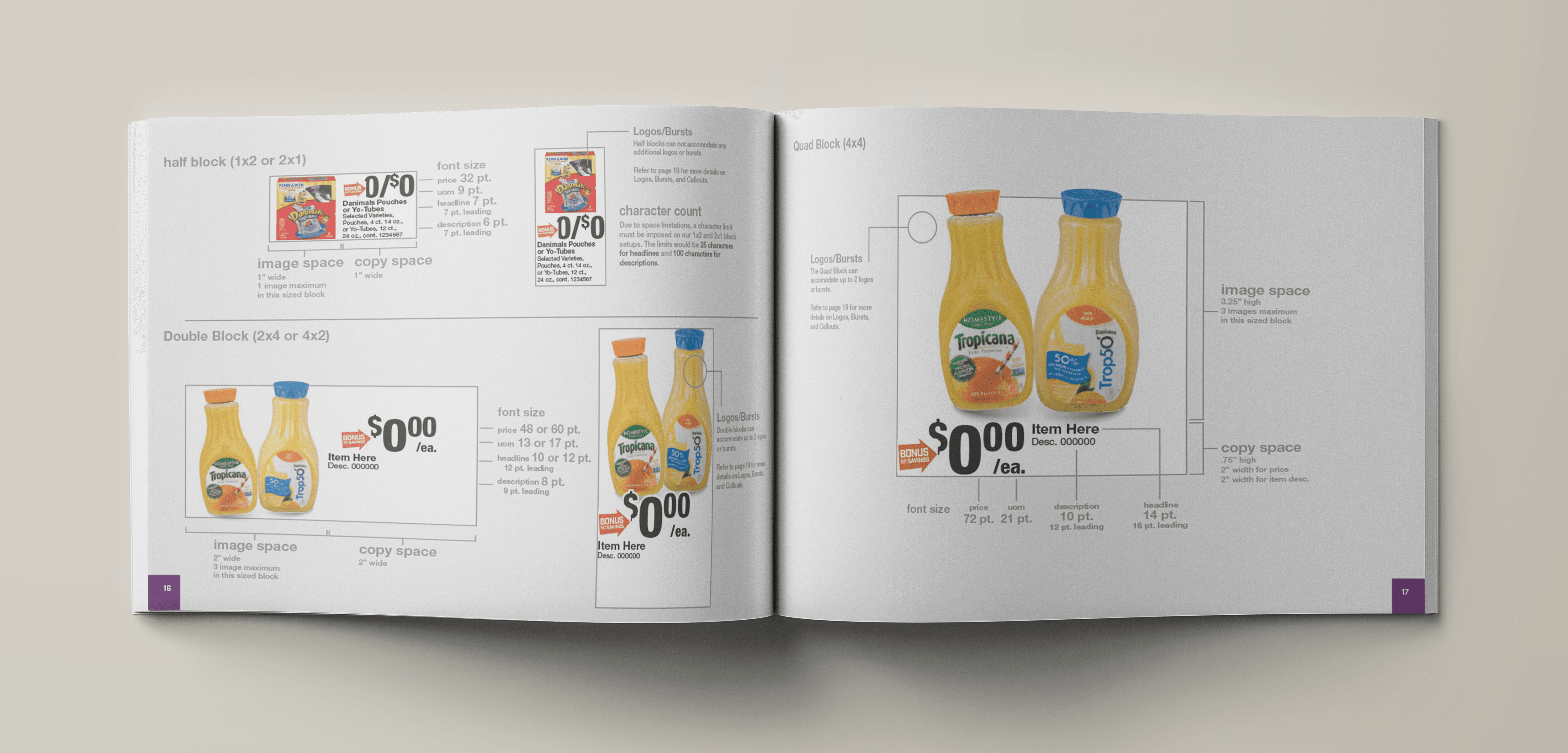
Item set ups in 4 standard sizes
Promotional offer setups
Department headers
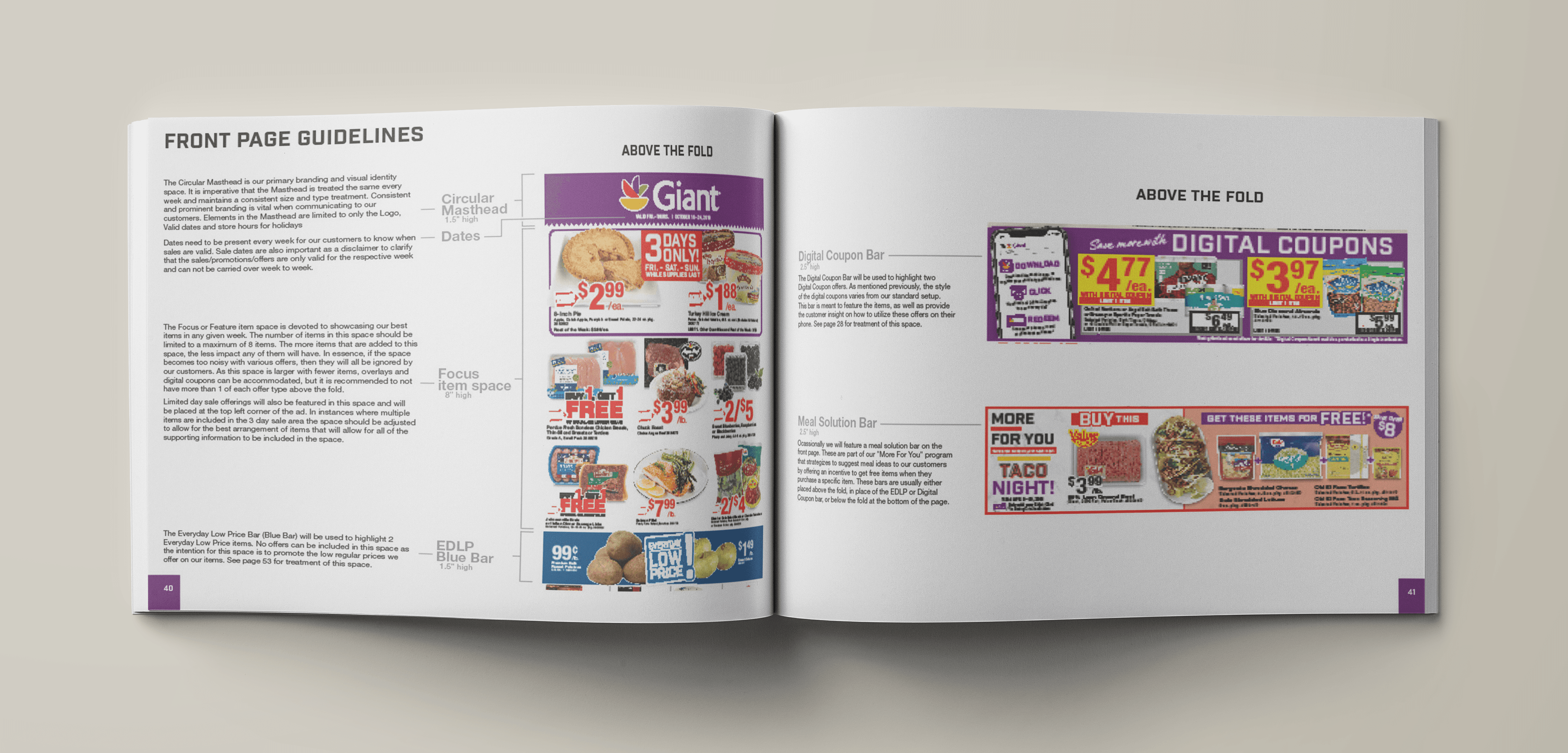
Ad Format breakdown
Holiday special Feature Sections

Results
Of course, the obvious result of working on a style guide is the style guide itself. Having your processes and design vision captured in a thorough document is rewarding and opens up several avenues for your team to improve its creative standards and better align to how I envisioned the ad looking. With the minute details explained and in an easy reference for production and designers we could focus on larger goals and new challenges.
The style guide also greatly improved my training and onboarding process for new associates and refreshers for existing employees. The Style Guide gave me the tools to teach and explain our creative standards to new employees and show them in clear and concrete details how to handle many of the complex and nuanced page layouts developed in the ad. Then new employees had the document to reference later during their training and solo production times if they couldn’t remember a specific item set up or how to style type in headlines.
Looking cross-functionally, the style guide gave my team a sort of Rosetta Stone of design language that we could use to educate our partners on other teams. It helped our collaborators and colleagues see how we treat our creative, but more importantly understand the why behind our decisions. Sharing and building this knowledge across teams helped us work on common ground and eliminate the less productive feedback my team received, which improved our efficiency and timelines.
Takeaways
I really enjoyed working through the exercise of developing a style guide and wish I had more opportunity to refine and build additional style guides in my role. They are probably one of the most satisfying adventures in design. I am always learning so much about design when I tackle a project like this.
Planning
Creating a style Guide of any complexity is a daunting task and requires an extensive amount of time and effort to pull off. Overcoming the challenge of documenting such an expansive process was rewarding and enlightening. This process took a lot of organization and planning on my end to ensure I was capturing every detail about our layouts and design language and wouldn’t be leaving anything open to interpretation by my team. It taught me how to tighten up my designs and work more cleanly and document those processes as I worked through the early stages of new designs.
Creative Feedback
Writing guidelines in an easy to approach and understandable language was a key part of the style guide project. Knowing that the audience wouldn’t just be designers I knew I had to use language and terms that would be easy for those not in the field to understand without having it explained. Figuring out how to describe creative in simple language has helped me immensely when giving creative feedback to designers. I learned that what I’m thinking and how I word things doesn’t always translate the way I intended for the other person.